
Why everyone ends up comparing these
If you’ve come across paneer for the first time, the natural instinct is to try and place it. Is it like halloumi? Is it closer to tofu? Can you swap it for feta?
It makes sense, most of us cook by analogy. We reach for what we already know and try to map something new onto it.
The slightly frustrating answer is that paneer doesn’t neatly sit in any one of those categories. It overlaps with all of them in different ways, but it also does something they don’t,
Paneer vs halloumi
This is the comparison people make most often, and on the surface it’s easy to see why. Both are cheeses, both hold their shape when cooked, and both can be fried or grilled.
Halloumi is firm, salty, and has that very distinctive squeak. It tends to dominate whatever you put it in, which can be great, but it also limits how often you want to use it. Paneer, on the other hand, is softer, more neutral, and much better at absorbing flavour.
If you’re cooking something where you want bold, salty intensity, halloumi does the job. If you want something you can build flavour around, paneer is usually the better choice.
Paneer vs tofu
Tofu sits in a slightly different space because it’s plant-based, but it’s often grouped with paneer as a high-protein alternative.
The main difference is how much effort each one requires. Tofu can be great, but it often needs pressing, marinating, and careful cooking to get the texture right. Paneer is much more straightforward. You can take it out of the pack, cook it, and it works.
In terms of flavour, tofu is very neutral, sometimes to the point of disappearing into a dish if you’re not careful. Paneer has more presence – still mild, but with a creamy richness that makes it feel more satisfying, it takes the same as mozarella.
If you enjoy the process of building flavour from scratch, tofu gives you that control. If you want something reliable that delivers quickly, paneer tends to win.
Paneer vs feta
Feta is usually part of this conversation because of how often it’s used in salads, but in reality it’s quite different.
Feta is crumbly, salty, and sharp, which makes it great for cutting through richer dishes or adding contrast. Paneer is much milder and more versatile. It doesn’t bring that same intensity, but that’s also what allows it to work across a wider range of meals.
Where feta is a finishing ingredient, paneer is more of a foundation. You can build a dish around it rather than just adding it at the end.
So where does paneer actually fit?
This is where it becomes more useful to stop comparing and start thinking about how you cook.
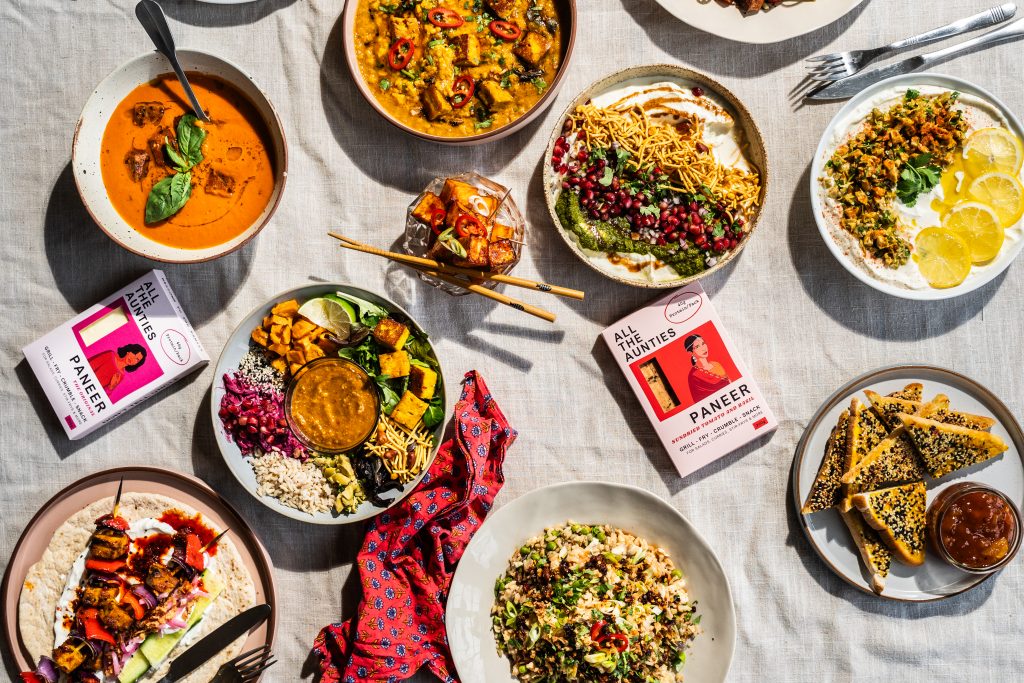
Paneer works best as an everyday protein – something you can reach for in the same way you might reach for chicken, halloumi, or tofu, depending on what you’re in the mood for. It’s high in protein, cooks quickly, and adapts to whatever you’re making.
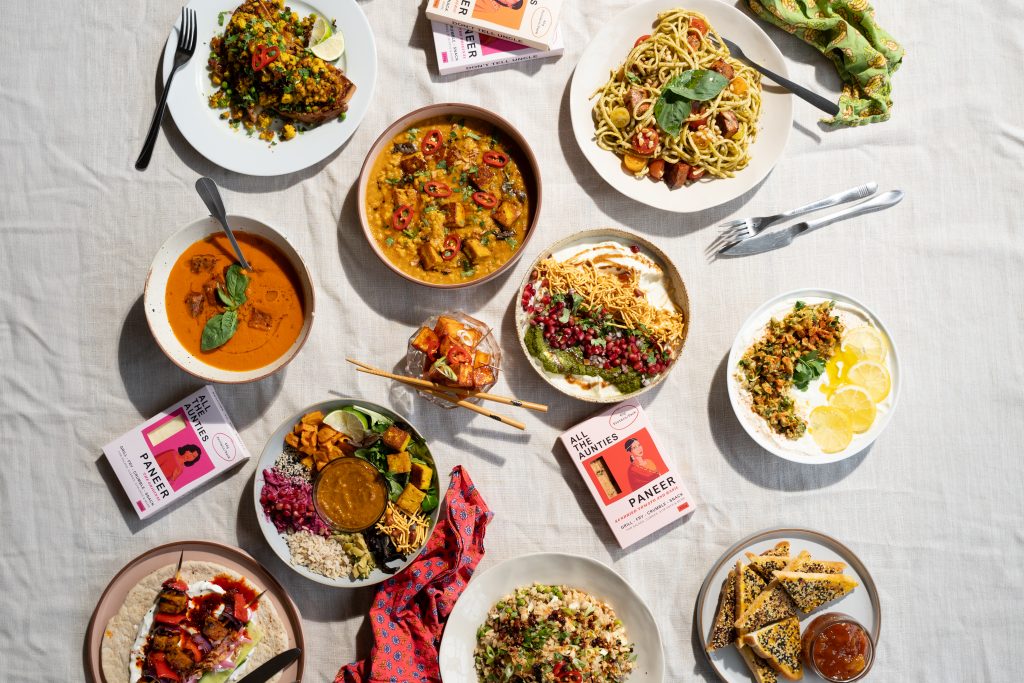
That flexibility is what makes it so great. You can fry it and add it to a curry, but you can just as easily throw it into a wrap, a salad, or a stir-fry. It doesn’t need a specific cuisine or occasion to make sense.
That’s also why we’ve built All The Aunties around it. For generations, paneer has been used in exactly this way – as a versatile, reliable ingredient that fits around real life cooking, not the other way around.
Which one should you choose?
It depends less on the ingredient itself, and more on what you want from your meal.
If you want something salty and punchy, halloumi is probably the right call. If you’re cooking plant-based and don’t mind putting in a bit more work, tofu does the job. If you’re after something sharp to finish a dish, feta works.
But if you want something that sits in the middle- high-protein, easy to cook, and flexible enough to work across different meals – paneer is often the one that makes the most sense.
It’s not about replacing everything else, it’s about adding something that fills a gap.
Where to start
If you’re curious but not quite sure how to use it, keep things simple.
Start with our Original Paneer, fry it until golden, and add it into something you already make – a wrap, a salad, a stir-fry. Once you get a feel for it, you can start experimenting with flavour.
If you’d rather skip a step, our Cumin, Chilli & Turmeric flavour brings warmth and spice straight away to any curry, whilst Garlic & Herb is an easy entry point that works across a lot of familiar dishes like salads and wraps.
You don’t need to completely change how you cook to make paneer work. You just need to give it a place in what you’re already doing.



Final thought
Paneer doesn’t need to replace halloumi, tofu or feta. It just makes your options better. And once it becomes part of your rotation, it tends to stay there.
Don’t fear, add paneer.
(and don’t tell Uncle)