
Why Indian cooking feels harder than it is
For a lot of people, Indian cooking sits in a slightly separate category. It’s something you order, or something you cook occasionally when you have time, a long ingredients list, and a vague sense that you should probably follow the recipe properly.
That perception didn’t come from nowhere, but it’s also not how most people actually cook at home.
The idea that Indian food has to be complex, time-consuming, or tied to specific rules is a bit misleading. Like any cuisine, it’s evolved through people adapting, substituting, and making things work with what they have. That’s certainly how our families have always cooked.
So if you’re new to it, the aim isn’t to learn everything. It’s to get comfortable enough to start.
Start with how you already cook
The easiest way into Indian-inspired cooking is not to approach it as something completely new, but as something that can sit alongside what you already do.
If you make stir-fries, roast vegetables, wraps, or quick midweek meals, you’re already most of the way there. The difference is usually just in the flavour – adding spices, layering ingredients slightly differently, or using something like paneer instead of what you might normally reach for.
That shift is much smaller than it sounds, and once you realise that, it becomes far less intimidating.
You don’t need a full spice cupboard
One of the biggest barriers is the assumption that you need a perfectly stocked spice rack before you can start. In reality, you can get a long way with a small number of things you’re probably already familiar with.
Cumin, turmeric, chilli, garlic, ginger – these aren’t obscure ingredients, they’re just used in slightly different combinations. You don’t need ten spices to make something taste good, you just need to understand how a few of them work together.
Over time, you’ll naturally build confidence and expand from there, but there’s no need to front-load that effort.
Think in building blocks, not recipes
Recipes can be helpful, but they can also make things feel more rigid than they need to be.
A simpler way to think about it is in building blocks. You have:
- a base (onions, garlic, ginger)
- spices for flavour
- something to give body (tomatoes, coconut milk, cream)
- and a main ingredient
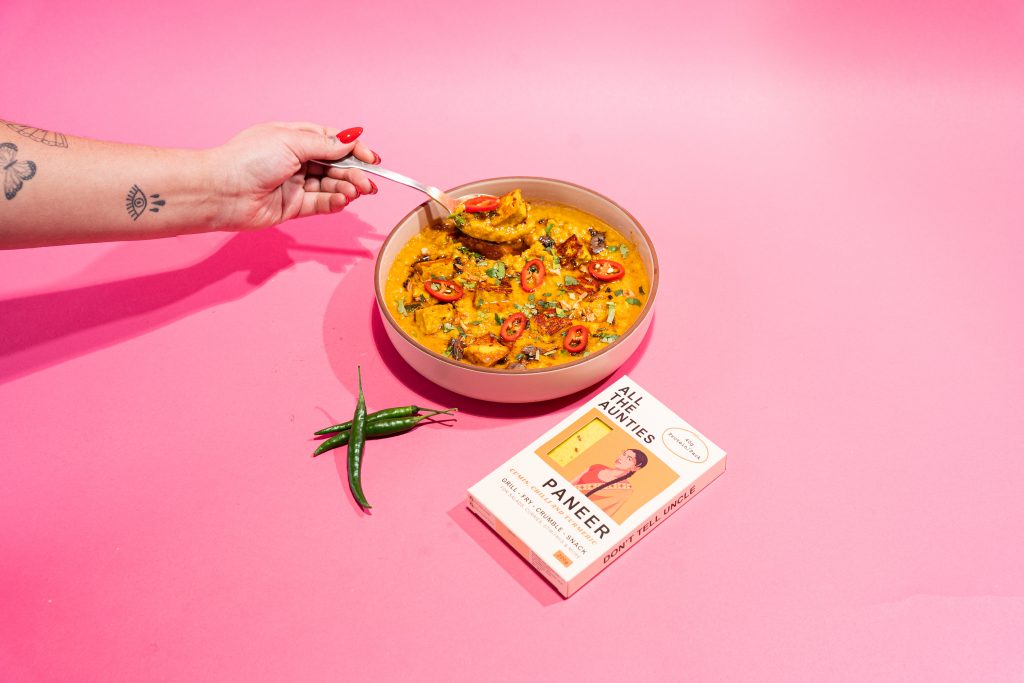
That main ingredient could be anything, but this is where paneer becomes particularly useful. It’s quick to cook, high in protein, and works across a wide range of dishes without needing much preparation.
Once you understand that structure, you don’t need to follow things step by step. You can adjust, substitute, and make it your own.

Where paneer fits in
Paneer is often seen as something specific to certain dishes, but in reality it’s much more flexible than that.
You can fry it and add it into a simple tomato-based sauce, toss it through spiced vegetables, or use it in places you might normally use chicken or halloumi. Because it holds its shape and absorbs flavour well, it works in a lot of different contexts without much effort.
Our Original Paneer is the easiest place to start if you want full control over flavour. If you’d rather simplify things slightly, Cumin, Chilli & Turmeric gives you a solid base of warmth and spice – perfect for any mid-week curry.
It’s not about cooking something traditionally, it’s about cooking something that works.
Keep it simple (especially at the start)
There’s a temptation to try and do everything properly from the beginning, but that usually slows people down.
A simple approach works better. Fry paneer until golden, add a few spices, maybe some tomatoes or a marinade, and see where it takes you. It doesn’t have to be perfect, and it doesn’t have to look like anything you’ve seen before.
The more you cook this way, the more natural it becomes. You stop thinking in terms of ‘Indian food’ and start thinking in terms of flavour and combinations.
This is how Aunties cook
The phrase ‘Cook like an Aunty’ isn’t about following a strict set of rules, it’s almost the opposite.
It’s about cooking with instinct, adapting to what’s available, and focusing on feeding people well rather than getting everything exactly right. For 3 generations, our family has cooked this way, adjusting to new countries, new ingredients, and new routines.
That mindset is what makes Indian inspired cooking feel accessible, rather than intimidating.